

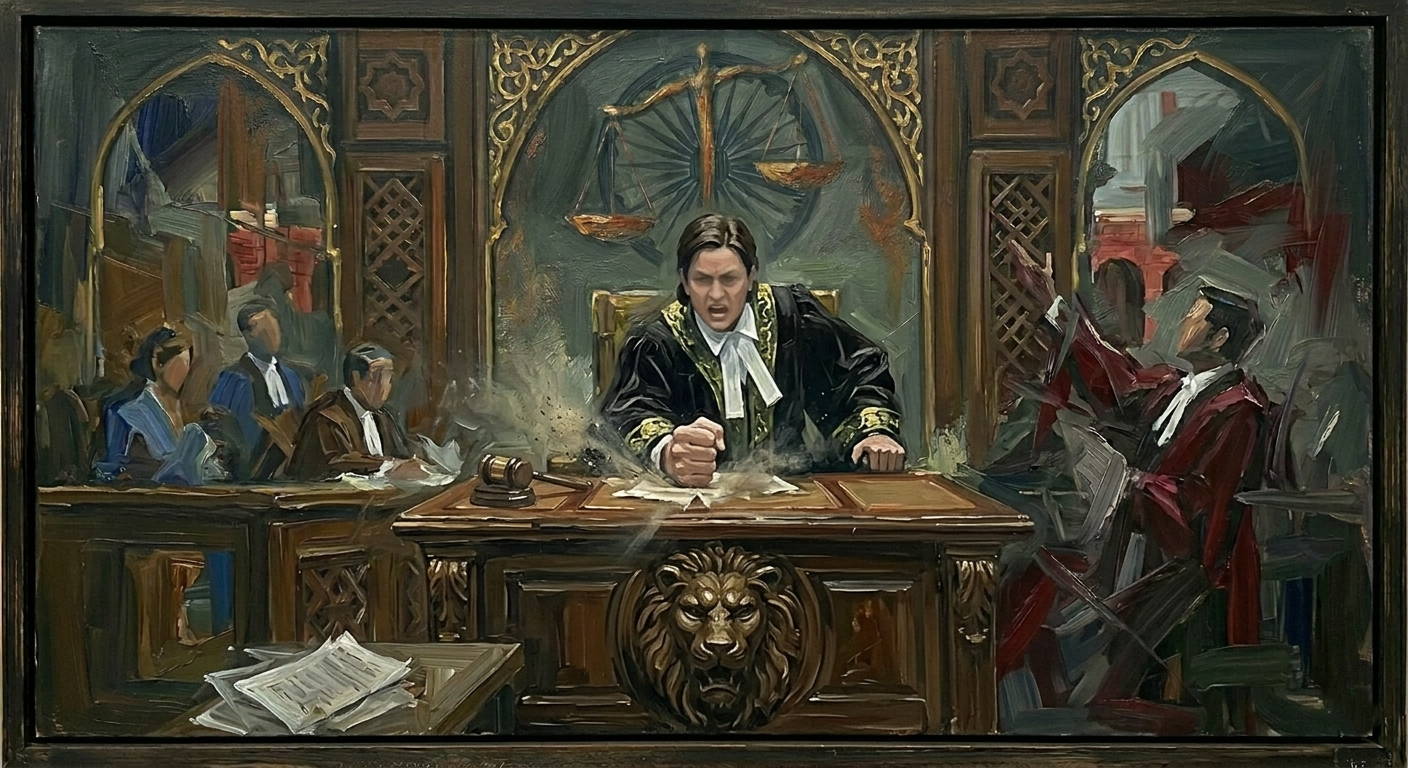
With an emphatic and detailed pronouncement in a 115-page Judgment dated April 20, 2026, Hon’ble Dr. Justice Swarana Kanta Sharma of the Delhi High Court dismissed all recusal applications filed by Arvind Kejriwal, Manish Sisodia, and four others in the Liquor Scam case (Central Bureau of Investigation v. Kuldeep Singh, Crl. Rev. P. 134/2026), asserting in bold letters, “I will not recuse” (Para 262). The refusal to recuse couldn’t be any more assertive.
Justice Sharma ruled that the apprehension of bias raised by the Applicants had no actual basis, and sufficient material had not been placed before the court to show that there could be an apprehension of bias, adding that “recusal has to stem from law and not narrative” (Para 249), implying that the Applicants were building a vacant narrative on imaginary possibilities of bias. So, the question that immediately emerges is whether, based on the material placed on record and the contentions advanced, the legal threshold for recusal laid down by the law in this regard was met.
Law on Recusal: Reasonable Apprehension of Bias
Though not codified, the law on judicial recusal is far from nebulous. On the contrary, it is built on the robust foundations of authoritative judicial pronouncements that ascribe primacy to public faith and demand of judicial officers impartiality beyond reproach, much like Caesar’s wife of Lord Bowen’s conception in Leeson v. General Council of Medical Education and Registration, (1889) L.R. 43 Ch. D. 366, 385 (Lord Bowen). Judicial impartiality and fairness, under Indian jurisprudence, must visibly exist, and are thus not just matters of fact but also of perception.
The Bangalore Principles of Judicial Conduct, an international standard of judicial conduct, adopted as revised at the Round Table Meeting of Chief Justices held at the Peace Palace, The Hague, in November 2002, lay down independence, impartiality, integrity, propriety, equality, and competence and diligence as accepted ‘judicial values’, and inter alia stipulates that “a judge shall avoid impropriety and the appearance of impropriety in all of the judge’s activities”, the key phrases being “impropriety and the appearance of impropriety”.
In Rupa Ashok Hurra v. Ashok Hurra, (2002) 4 SCC 388, a Constitution Bench of five judges, including the then Chief Justice of India, Justice S.P. Bharucha, formulated the judicial device of Curative Petition, and said that “a petitioner is entitled to relief ex debito justitiae if he establishes” either “a violation of principles of natural justice”, or “where in the proceedings a learned Judge failed to disclose his connection with the subject-matter or the parties giving scope for an apprehension of bias”, the key expression here being “giving scope for an apprehension of bias”.
In State of Punjab v. Sumedh Singh Saini, (2011) 14 SCC 770, the Supreme Court reiterated the same principle and said, “a mere ground of appearance of bias and not actual bias is enough to vitiate the judgment/order.” And in Supreme Court Advocates-on-Record Association vs. Union of India (Recusal Matter), (2016) 5 SCC 808, another five-judge Constitution Bench of the Apex Court elaborated the test involved thus: “The simple question is, whether the adjudication by the Judge concerned, would cause a reasonable doubt in the mind of a reasonably informed litigant and fair-minded public as to his impartiality.” The Bench further observed that “being an institution whose hallmark is transparency, it is only proper that the Judge discharging high and noble duties, at least broadly indicate the reasons for recusing from the case so that the litigants or the well-meaning public may not entertain any misunderstanding that the recusal was for altogether irrelevant reasons.”
What thus crystallizes is that both the recusal and the refusal to recuse must transparently outline the reasons in a speaking order, and for the test of reasonable apprehension of bias, the anvil of reasonableness is “a reasonably informed litigant and fair-minded public”.
The Issue of Framing
In her judgment dismissing the recusal application, Justice Sharma observed, “Unfortunately, today, it is not a dispute between two litigants that I have been called upon to decide; it is between a litigant who is a discharged accused and myself, the Judge” (Para 239).
Justice Sharma also says in the judgment, “I was thus faced with a situation where my impartiality and dignity had been challenged, and the natural instinct would have been to recuse without hearing the application seeking recusal, which would have been the easier path of withdrawing and stepping aside. However, for the sake of the institution, I decided to adjudicate the recusal application, for it throws questions not only at me, but also at the institution itself” (Para 5).
The recusal application only seeks the recusal of the Learned Judge from hearing the matter and does not in any way indict the institution of the Judiciary, and to suggest otherwise is a massive overstatement that is both improper and uncalled for.
The Learned Judge also says that “the judges of District Courts of Delhi, who are part of this institution, may be affected by the outcome of this application since it may be cited as a precedent and many other litigants may take a similar path” (Para 5). Which path? The path of seeking recusal? But then, Justice Sharma also says in the same judgment that “The Court carries no bitterness against any applicant for moving applications for recusal since they were exercising their right, as per law” (Para 265).
How could the exercise of a right under the law be a path that litigants are to be discouraged from taking? It’s unclear which “outcome” of the application the learned judge saw as potentially affecting the district judiciary. Could it mean that allowing a recusal application was the undesirable outcome referred to? But that means, by natural corollary, that the only desirable outcome of a recusal application was its dismissal. In other words, filing itself sealed the fate of the application. If the attempt to exercise a right necessarily results in its denial, is it a right at all? Surely, the learned judge means something else, for she certainly couldn’t mean that.
The framing of the issue itself is hugely problematic because, in framing the issue as between a discharged accused and herself, Justice Sharma takes an unnecessarily combative stand, stepping into the shoes of an opposing litigant, whereas the issue simply was whether, based on the grounds raised, it would appear fairer for the matter to be heard by a different Bench.
Recusal is not an ipso facto admission of bias, for it only means that the grounds raised are not frivolous, or that it might appear fairer and be more reassuring to all litigants in the matter, were the case heard by a different judge. However, Justice Sharma seems to believe that a recusal would mean an admission of bias, for she says, “If this Court were to recuse on account of the accusations, the litigant would be in a position to claim before the country that his allegations had substance and proof and therefore, the judge has recused” (Para 219).
Framing the issue as a challenge to her “impartiality and dignity”, Justice Sharma took a defensive posture and made the recusal about the judge rather than the grounds raised in the recusal application. No wonder then that the judgment reads angry, and the author seems miffed. “The applications were not questioning a decision, but whether the decision-maker could make a decision,” says Justice Sharma in the judgment (Para 252). Throughout the judgment, Justice Sharma takes issue with the Applicants asserting their regard and respect for her on the one hand, and continuing to impugn her impartiality on the other.
The judgment also records categorical submissions by Senior Advocate Sanjay Hegde, representing Manish Sisodia, that while “based on objective circumstances”, “the applicant harbours a reasonable apprehension that the matter may not be heard with complete impartiality by this Court” (Para 20), “the submission is not that this Court is actually biased, but that the apprehension in the mind of a reasonable litigant, who is facing serious consequences affecting his liberty, is that the matter may not be considered with a completely open mind” (Para 23). Submissions on behalf of other Applicants were also on the same lines of “reasonable apprehension”, and none of the Applicants argued actual bias.
Clearly, the arguments for recusal are framed in terms of “reasonable apprehension” as opposed to “actual, demonstrable bias”, and yet the Learned Judge demands “material on record” showing something more than “mere apprehension”, and reframes the issue thus: “The rules of natural justice must apply equally when a Judge is judging a litigant and when a litigant seeks to judge a Judge. Can it be said that, without any material on record, a Judge can be placed under a veil of suspicion merely on the basis of apprehension?” (Para 229).
The litigant doesn’t “seek to judge a judge” by a recusal application. The litigant presents their apprehension and seeks indulgence of the court to analyze and judge the “reasonableness” of the “apprehension”. Thus, it is the reasonableness of the apprehension of bias that is to be looked at rather than the existence, or even probability, of actual bias. In framing the question the way the court does, it misconstrues both who is judging and what is being judged, and in invoking the principles of natural justice, further mislocates the adjudicating judge to the position of a defending litigant. Thus, quite naturally and inevitably, the judgment turns into a defensive exercise on account of the misframing of the issue itself.
Not only does the Learned Judge misframe the issue of “reasonable apprehension” as “actual bias”, but she also misconstrues the recusal application as an institutional challenge.
The First Order and the Recusal Application
The Applicants apprehended biases that fall in three broad categories — Subject Matter or Adjudicatory Bias, Structural Bias arising from the professional engagements of the Learned Judge’s immediate family, and Personal Associational Bias. And the biases were seen as reflected in the slew of quick directions in the very first order, along with the prima facie findings that appeared to call into question the legal soundness of the findings of the trial court in the discharge order after hearing just the counsel for the CBI.
On March 9, 2026, the very first date of hearing in the matter, when the Respondents were unrepresented despite advance service, Justice Sharma granted time until the next date of hearing (March 16, 2026) to the Respondents to file a response; effectively stayed the trial in the case under the Prevention of Money-Laundering Act, 2002 (PMLA) filed by the Enforcement Directorate (ED) until the next date by way of a request to the trial court to adjourn the matter to a date later than March 16, 2026, and also stayed until the next date the observations of the trial court qua the Investigation Officer in the discharge order together with direction to initiate departmental inquiry against the officer by the trial court. Justice Sharma, after hearing the CBI and without hearing the Respondents, observed that it was her opinion that the impugned order of discharge and the observations therein “prima facie appear erroneous, and need consideration when viewed in the background of well-settled law on charge and conspiracy, as to whether such observations could have been made at the stage of charge itself.”
The rapid developments, with several steps in the course of a single hearing, apparently rattled the Respondents, including Arvind Kejriwal and Manish Sisodia, who have been at the receiving end of the investigation in question for a long time, having spent substantial time behind bars, and prompted the recusal application that was eventually dismissed by Justice Sharma by judgment dated April 20, 2026.

Subject Matter Bias
The Applicants argued that since Justice Sharma had extensively dealt with the same subject matter on several occasions, having adjudicated several petitions and applications filed by the Applicants on earlier occasions, she had come to form strong prima facie opinions on several aspects of the case. The prima facie views expressed by Justice Sharma in the previous orders also touch upon the evidentiary aspects of the matter, in which regard the Learned Trial Court has taken a very different view after examining the detailed records placed before it by the investigation agency and after hearing both sides at length.
Therefore, the Applicant’s concern was that the court may find it difficult to depart from the views it had earlier taken on several material issues in the matter and affirm the Trial Court’s discharge order, which heightened the likelihood of an adverse outcome for the Applicants. The apprehension naturally grew stronger in view of the first order of March 9, 2026 in the matter, wherein Justice Sharma found that “the observations made by the learned Trial Court regarding statements of the witnesses and the approvers, at the stage of charge itself, prima facie appear erroneous,” which opinion was in line with Justice Sharma’s earlier views expressed in her past orders in the matter. Thus, to the Applicants, the fate of the discharge order under challenge looked sealed from day one.
Justice Sharma is absolutely correct when, in response to the argument of subject matter bias, she says that the prima facie opinion expressed for the limited purpose of deciding a bail application does not amount to a determination on merits, and the elaborate remarks made in the bail order were occasioned by the extensive arguments addressed by the counsel for the Applicants, and addressing those arguments was necessary for a substantive speaking order. But the March 9, 2026 order does not reflect the employment of a different standard because Justice Sharma questions the Trial Court’s appreciation of the statements of the witnesses and the approvers, which happens to be the principal point of divergence between Justice Sharma’s prima facie opinions expressed in her previous orders in the matter and the discharge order of the Trial Court.
So, the apprehension that the Court was likely to view the discharge order through the prism of its earlier view does, in fact, meet the threshold of reasonableness.
Structural Bias from Familial Professional Engagements
By way of an Additional Affidavit, Kejriwal argued that since both the son and the daughter of the Learned Judge (referred to as “certain family members of this Court” in the judgment) were on the panel of the Central Government and were allotted a large number of cases through the office of the Solicitor General, the very counsel representing the CBI in the matter, there was a conflict of interest.
The Learned Judge countered it by saying that the government appears as the State in a large number of cases, and if the impanelment of her close relatives on government panels presented a conflict of interest, it applied to a large number of cases on the criminal roster. The Learned Judge characterizes empanelment as Government counsel as “a professional engagement and nothing more.” The Learned Judge says that “if the children of politicians can enter politics, how would it be just to question the children of a Judge who study like others, struggle like others, and prove themselves in Court like others to earn their livelihood? Accepting such an argument would mean taking away the fundamental rights of the family members of judges” (Para 182).
Firstly, there is no bar on the family members at all, and if there is a bar in any circumstances, it is on the judge in question, and the same does not operate as a professional limitation because judges have no interest in hearing any particular cases or class of cases.
Secondly, and more importantly, the recusal requests have to be necessarily seen in the context of the specific case and the litigants involved.
The State is not the same entity as the governments and the political parties, nor can the ruling dispensation be equated with the State. In the Liquor Scam case, the Accused have consistently argued that the central investigative agencies have been misused by the ruling dispensation to launch a baseless investigation to serve political ends. The Learned Trial Court, in its discharge order, which is under challenge before the Learned Judge in the proceedings, has come down heavily on the investigation agency and has recommended a disciplinary inquiry, which lends some credence to the allegations of a political motivation. Therefore, this is not a regular criminal revision petition where the State is a party, and to treat it as such would be a massive oversimplification. That the case has a predominant political side to it has been argued before the court, and the relevance or the weight of that aspect cannot be lightly brushed aside.
The bias under “conflict of interest” as argued in the matter is largely a psychological phenomenon rather than an issue of integrity, and while Justice Sharma might not be conflicted in any way, the reasonableness of such apprehension holds in the totality of circumstances.
Personal Associational Bias
The Applicants also argued that since the Learned Judge had attended several functions organized by Akhil Bharatiya Adhivakta Parishad, an RSS-affiliated Hindu nationalist association of lawyers widely seen as RSS’s legal front, the Learned Judge likely carries ideological leanings that the Applicants have openly been stridently against, and for that reason, the Applicants harboured an apprehension of ideological bias.
The Learned Judge countered the argument by saying that the functions organized by Akhil Bharatiya Adhivakta Parishad (ABAP) were not political events, and she had only attended legal functions organized by the said organization and had delivered no ideologically loaded speeches at those functions, and her engagement was purely to contribute to the legal discourse. The Judgment notes that “they were programmes organised by a body of lawyers, where occasions such as Women’s Day celebrations, seminars for lawyers on new criminal laws, and other professional discussions were conducted, and speakers were invited to interact with members of the legal fraternity” (Para 153). The Judgment, referring to the argument of perceived ideological bias, says, “Such an argument has to give way to the right and duty of a Judge to attend legal functions organised by members of the Bar, for the benefit of the legal fraternity” (Para 155).
Bar Councils (like Bar Council of Delhi, Bar Council of Uttar Pradesh etc.) and Bar Associations (like Delhi Bar Association, Delhi High Court Bar Association etc.) are official associations for all members of the Bar, whereas other associations formed by lawyers on ideological lines or to pursue other goals and objectives are simply associations constituting the members of the bar, even if their membership is exclusive to lawyers, and they take colour from their constitutional objectives rather than the membership. A failure to see the distinction suggests extreme innocence unbefitting a High Court judge.
Besides, in a polity as acutely polarised on communal and ideological lines as ours today, it is naive to expect people — reasonable and informed as well as others — not to read meaning into the attendance by a sitting judge of an event organised by a body openly affiliated to a political party, irrespective of the nature and purpose of the event or function. It is not the case that certain members or office bearers of the ABAP have certain ideological leanings, but the entire organization is seen as RSS’s legal front, and attending any functions organized by such a body is likely to suggest an ideological likemindedness to both “a reasonably informed litigant and fair-minded public.” Thus, the standard of “reasonabileness” of the apprehension is squarely met.
Cumulative Impact
The “reasonable apprehension of bias” in this case stems from multiple factors, as outlined above, including the directions and observations in the very first order dated March 9, 2026. While the biases pleaded for the “apprehension” were in and of themselves reasonable based on the totality of circumstances, the March 9, 2026 order further reinforced the reasonableness of the apprehension, especially in respect of the subject-matter bias. Therefore, the grounds raised cumulatively presented a strong case for recusal, and since the doctrine of necessity is not attracted in this case, recusal was a better course. An angry recusal was better than an angry dismissal, as the Learned Judge could just as well record her acute displeasure exactly the same way, and yet recuse herself taking higher ground of graciously granting the prayer despite finding the grounds lacking only to remove all apprehensions in one fell swoop. But now, the matter has to be decided by the same court, which might cast a shadow on the final outcome of the case.